Deciding what to wear in Morocco is simpler than many visitors expect. There is no official dress code for visitors, and you will see everything from jeans and T-shirts to traditional djellabas on the streets of Marrakech. What you wear makes more difference to your comfort than to any rule: the right layers for cold desert nights, shoes that cope with cobbled lanes and stony paths, and clothes that keep the sun off. Dressing a little more modestly than you might at home also makes daily interactions smoother, especially outside the city. This guide covers what to pack for Marrakech, the desert, the mountains and the coast, season by season.
Is there a dress code for tourists in Morocco?
No law tells visitors what to wear. Morocco is a Muslim country with a wide range of styles, from very conservative to very relaxed, and Marrakech in particular is used to international visitors. The practical guideline is simple: in cities, villages and religious areas, clothes that cover the shoulders and knees are respectful and draw less attention. The UK government’s travel advice for Morocco suggests that women consider loose-fitting clothing that covers the arms, legs and chest.
Modest does not mean covered from head to toe. Loose trousers, midi or maxi skirts and dresses, linen shirts and T-shirts with sleeves all work well, are cool in the heat, and protect you from the sun. Visitors are not expected to cover their hair.
The same applies to men: shorts are common among tourists in Marrakech, but long trousers are more comfortable in the medina’s crowds, in villages and for any visit to a religious site.
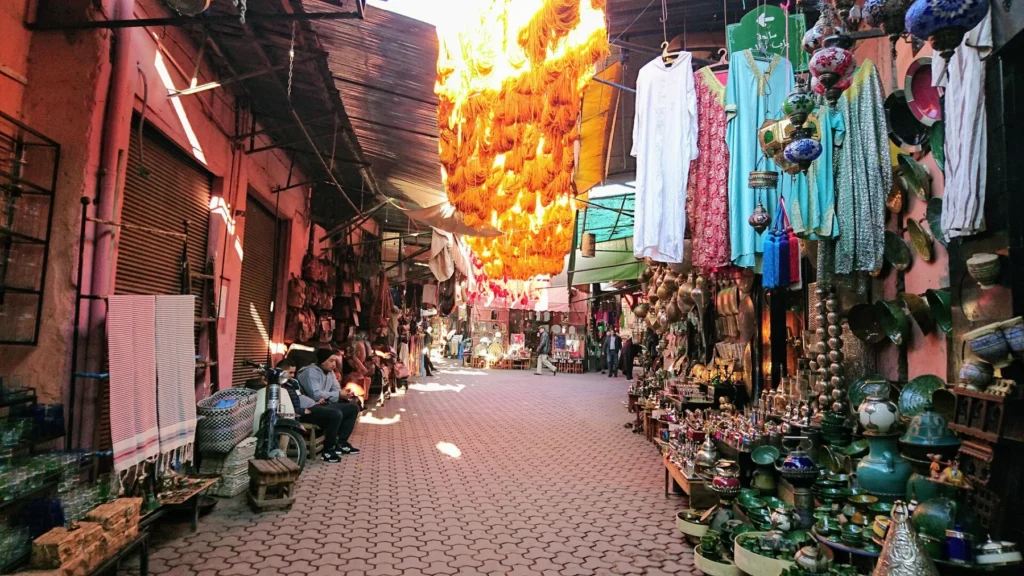
What to wear in Marrakech
Marrakech is hot for much of the year and dry, with cool evenings in winter. In the medina you will walk a lot on uneven paving, often in the sun, and step into shaded souks where the temperature drops.
- Breathable fabrics: cotton and linen are far more comfortable than synthetics in summer.
- Covered shoulders and knees for the medina, the souks and monuments; it also prevents sunburn.
- Comfortable closed shoes or sturdy sandals: the lanes are uneven, shared with bicycles and motorbikes, and occasionally dusty or wet.
- A light layer for the evening: from November to March, nights can be cold enough for a jumper or light jacket, and many riads are cooler indoors than you expect.
- Something smart-casual if you plan dinners in upmarket restaurants or hotels.
Visiting mosques and religious sites
Most mosques in Morocco, including the Koutoubia in Marrakech, are not open to non-Muslim visitors, although you can admire them from outside. Sites such as the Bahia Palace, the Saadian Tombs and the Ben Youssef Madrasa are open to everyone. The Hassan II Mosque in Casablanca is one of the few mosques that non-Muslims can visit, on guided tours; covered shoulders and knees are expected, and a scarf is useful.
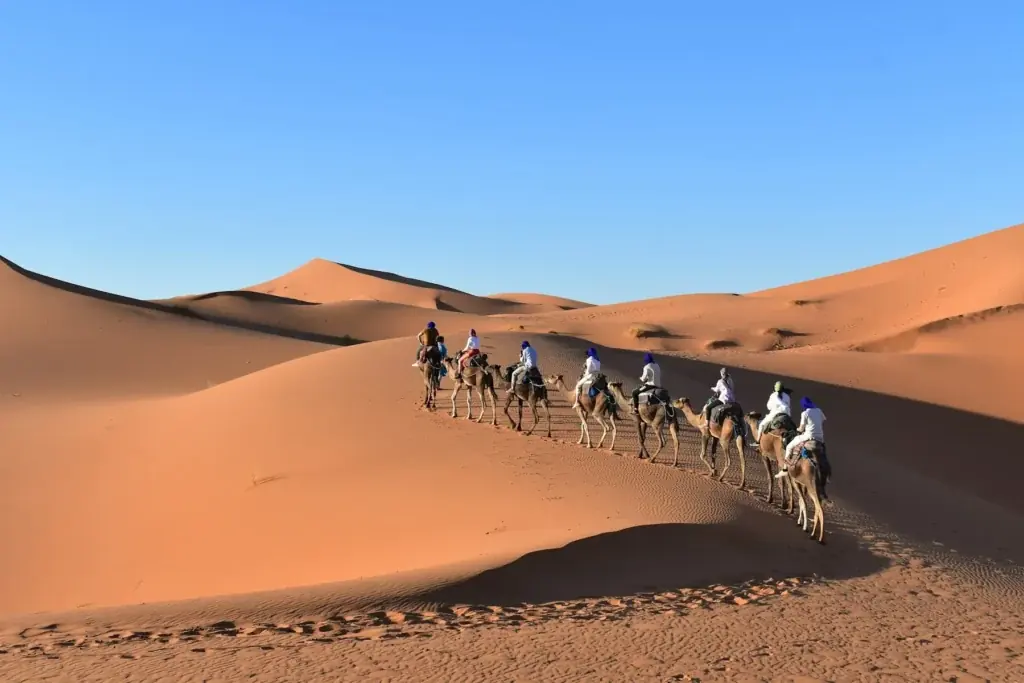
What to wear in the desert
Desert days and desert nights call for very different clothes. The temperature can fall sharply after sunset, especially between November and March, and wind and sand get everywhere.
The Agafay Desert
The Agafay, about 45 minutes from Marrakech, is a stony desert rather than a sand sea. For an afternoon and sunset visit, wear long, comfortable trousers and closed shoes for the camel ride, and bring a warm layer for the evening. Sunglasses and a scarf protect against dust, particularly if you add a quad bike ride. Our guide to the best time to visit the Agafay covers the season-by-season details.
The Sahara: Merzouga and Zagora
On a multi-day trip to the dunes, pack for heat during the day and cold at night:
- Loose, light-coloured clothing with long sleeves for daytime sun.
- A warm fleece or down jacket for the evening in the camp, even in spring and autumn. In winter, nights can approach freezing.
- A scarf or cheche (desert headscarf) to protect your face from sun and blowing sand; they are sold in many towns along the way.
- Closed shoes or trainers for the camel trek and walking on dunes. Sand gets hot in summer, so walking barefoot is best kept for the cooler hours.
- A small overnight bag: on most desert tours, the main luggage stays in the vehicle while you ride to the camp.
Our Merzouga desert guide has more on the night in the dunes.
What to wear in the Atlas Mountains
It is always cooler in the mountains than in Marrakech, and the weather can change within an hour.
- Shoes with good grip: light walking shoes or trainers with a proper sole. Sandals are not suitable for most paths.
- Layers: a T-shirt, a warm mid-layer and a windproof or waterproof jacket from autumn to spring.
- A warm hat and gloves in winter, when snow is common on the higher ground.
- Modest clothing in villages, with shoulders and knees covered.
Read more about walking in the mountains in our guide to visiting Berber villages in the High Atlas.
What to wear on the coast
Essaouira and the Atlantic coast are usually cooler and much windier than Marrakech. A windproof jacket or warm layer is useful even on a summer day trip, along with sunglasses and sunscreen: the breeze hides how strong the sun is. Swimwear is normal on the beach and at hotel pools, but cover up when you walk back into town. See our practical guide to a day in Essaouira.
Footwear: what to pack
| Situation | Best footwear |
|---|---|
| Marrakech medina and souks | Comfortable closed shoes or sturdy sandals with a back strap |
| Agafay camel ride or quad | Closed trainers |
| Sahara dunes and camp | Trainers; sandals for the camp |
| Atlas village walks | Walking shoes or trainers with good grip |
| Essaouira | Comfortable shoes for cobbles and ramparts |
| Hotels, riads and pools | Flip-flops or sandals |
Two pairs usually cover a whole trip: closed shoes with grip, and comfortable sandals.
Sun protection and hydration
The Moroccan sun is strong all year, including in winter and in the mountains.
- Sunscreen, a wide-brimmed hat or cap, and good sunglasses.
- A reusable water bottle, refilled with bottled or filtered water. Most visitors drink bottled water rather than tap water.
- A scarf, which protects against sun, wind and dust and doubles as a cover-up when needed.
- In summer, plan sightseeing for the morning and late afternoon, and rest during the hottest hours.
Packing by season
| Season | Marrakech by day | Evenings and desert nights | Extras |
|---|---|---|---|
| Spring (Mar–May) | Light, covering clothes | Fleece or light jacket | Rain jacket for the mountains |
| Summer (Jun–Aug) | Loose linen and cotton, hat | Light layer for the desert | Plenty of sun protection |
| Autumn (Sep–Nov) | Light clothes | Warm layer from late October | Jacket for the coast and mountains |
| Winter (Dec–Feb) | Long sleeves, light jacket | Warm coat, hat and gloves for the desert | Warm layers for riads and the Atlas |
Useful items for day trips and overnight tours
- A small daypack for water, layers and sun protection
- Cash in dirhams for lunch, tips and small purchases
- A power bank for long days with photos
- Tissues or travel toilet paper and hand sanitiser
- Any medication you need, plus motion-sickness tablets if mountain roads affect you
- For overnight desert tours: a head torch, a warm layer and a small bag for the camp
A note on Ramadan
During the holy month of Ramadan, many Moroccans fast from dawn to sunset. Visitors are not expected to fast, and tourist restaurants stay open, but eating, drinking or smoking in public during the day can cause offence, and dressing modestly is especially appreciated. Ramadan dates move each year, so check them when you plan.
Frequently asked questions
Can women wear shorts in Marrakech?
Some do, and it is not illegal. Loose trousers or skirts below the knee are more comfortable in the heat, draw less attention in the medina and are more respectful in villages.
Do I need to cover my hair in Morocco?
No. Visitors are not expected to cover their hair. A scarf is useful for sun, wind and the rare visit to a mosque open to non-Muslims.
What should I wear for a camel ride?
Long, comfortable trousers and closed shoes. Add a scarf and sunglasses against sun and sand, and a warm layer if you ride at sunset.
How cold does it get in the desert at night?
It depends on the season. From November to March, nights in the Sahara can approach freezing, and the Agafay can be cold too. In summer, nights are warm.
Is it better to buy clothes in Morocco?
You can buy scarves, cheches and light clothing in the souks, often cheaply. Bring your own walking shoes and warm layers, which are harder to find in the right size and quality.
Planning your trip
If you are planning desert, mountain or coastal days from Marrakech, our drivers pick you up at your hotel or riad and we tell you in advance what to bring for each trip. See our day trips from Marrakech and multi-day tours, or ask us a question.
Photo credits (Wikimedia Commons): Marrakech street by Edviges, CC BY-SA 4.0.